Extra Data for Kit 19.02
Chesapeake & Ohio and Pere Marquette 1930 40-foot steel automobile box car
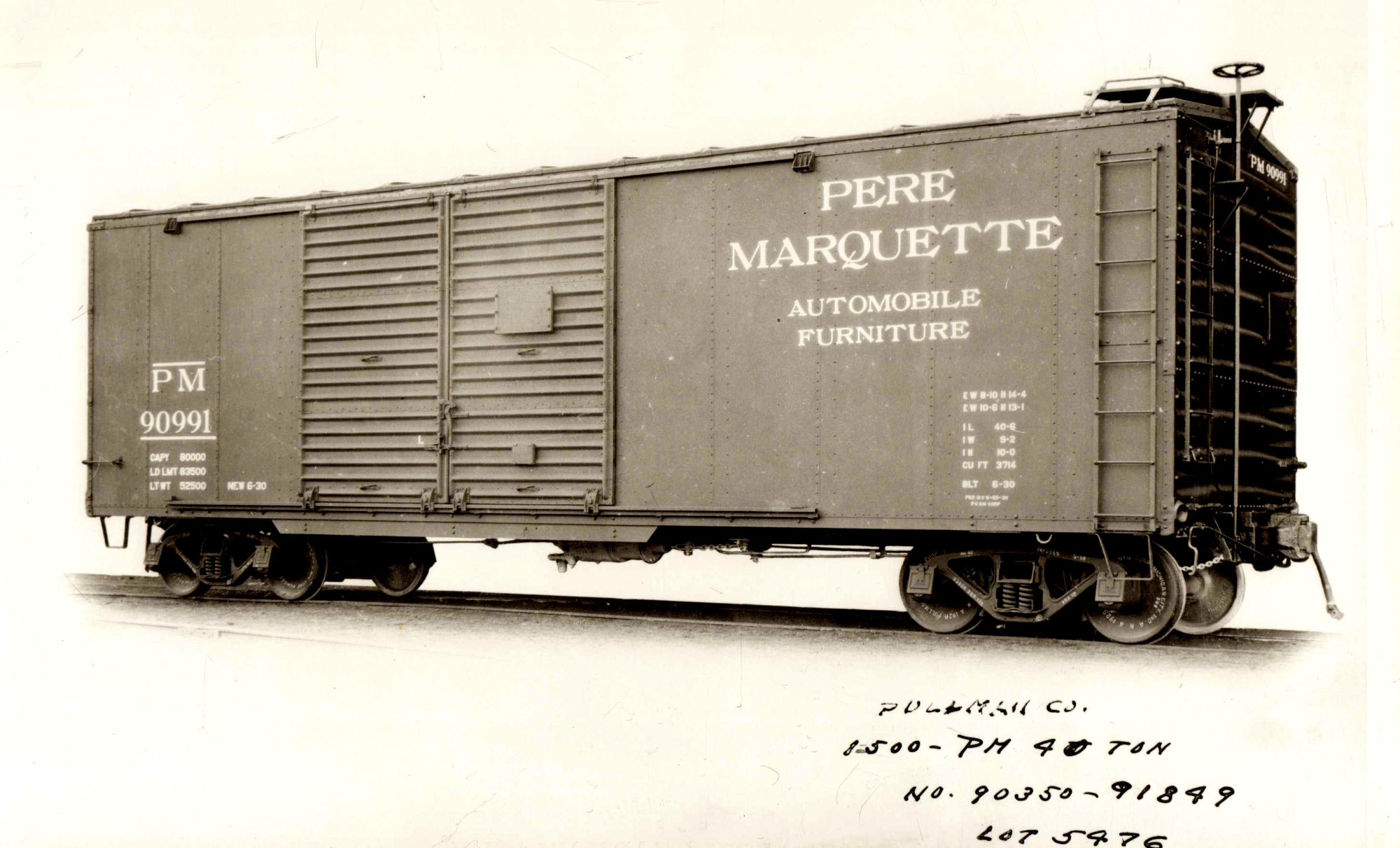
Pullman Car & Manufacturing Company builder image
In 1930, the Pere Marquette ordered 1,500 Automobile/Furniture cars from Pullman Car Manufacturing Company and 500 from the Pressed Steel Car Company. The Pullman cars were numbered 90350-91849, while the Pressed Streel cars were numbered 91850-92349. These Pressed Steel cars differed from the Pullman cars in that they had an end door and a Chicago-Cleveland Climax radial roof. Outwardly, the cars were otherwise the same. The order was part of the railroad’s expansion of its rolling stock to take advantage of the exploding automobile industry and the need to move the newly manufactured autos to the dealers around the United States.
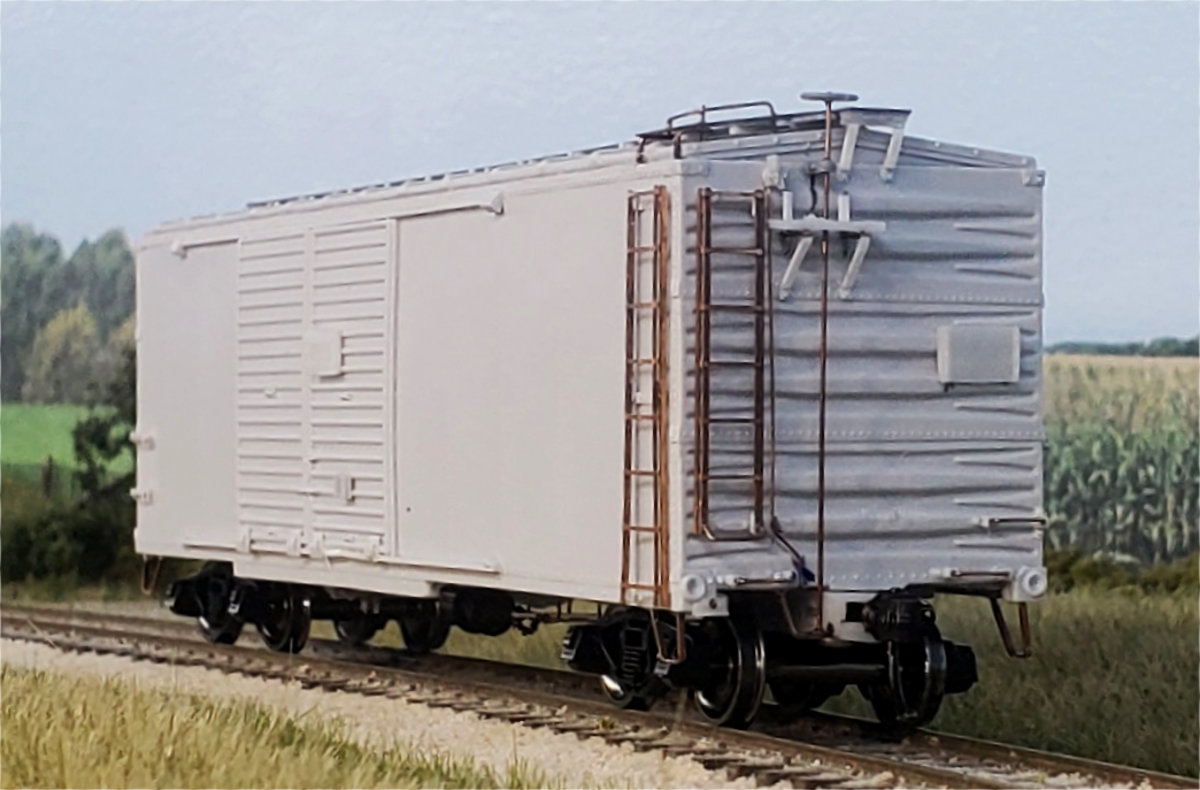
Photo and model by Frank Hodina
The Pullman built cars (the focus of this kit) were of all steel construction with unique three-piece “recessed” ends, Hutchins Dry Lading roofs, double Youngstown corrugated doors with Camel no. 50 fixtures covering a 12-foot door opening, K brakes, unpowered shaft hand brakes, bottom operated couplers, towing loops, and cast steel ARA style trucks. The cars came with a single bracket-type grab at the left edge of the car sides. The ladders were 8-rung side and 7-rung end, with the bottom rung on the end ladders being drop grab irons. As delivered, the cars were not equipped with auto loaders.
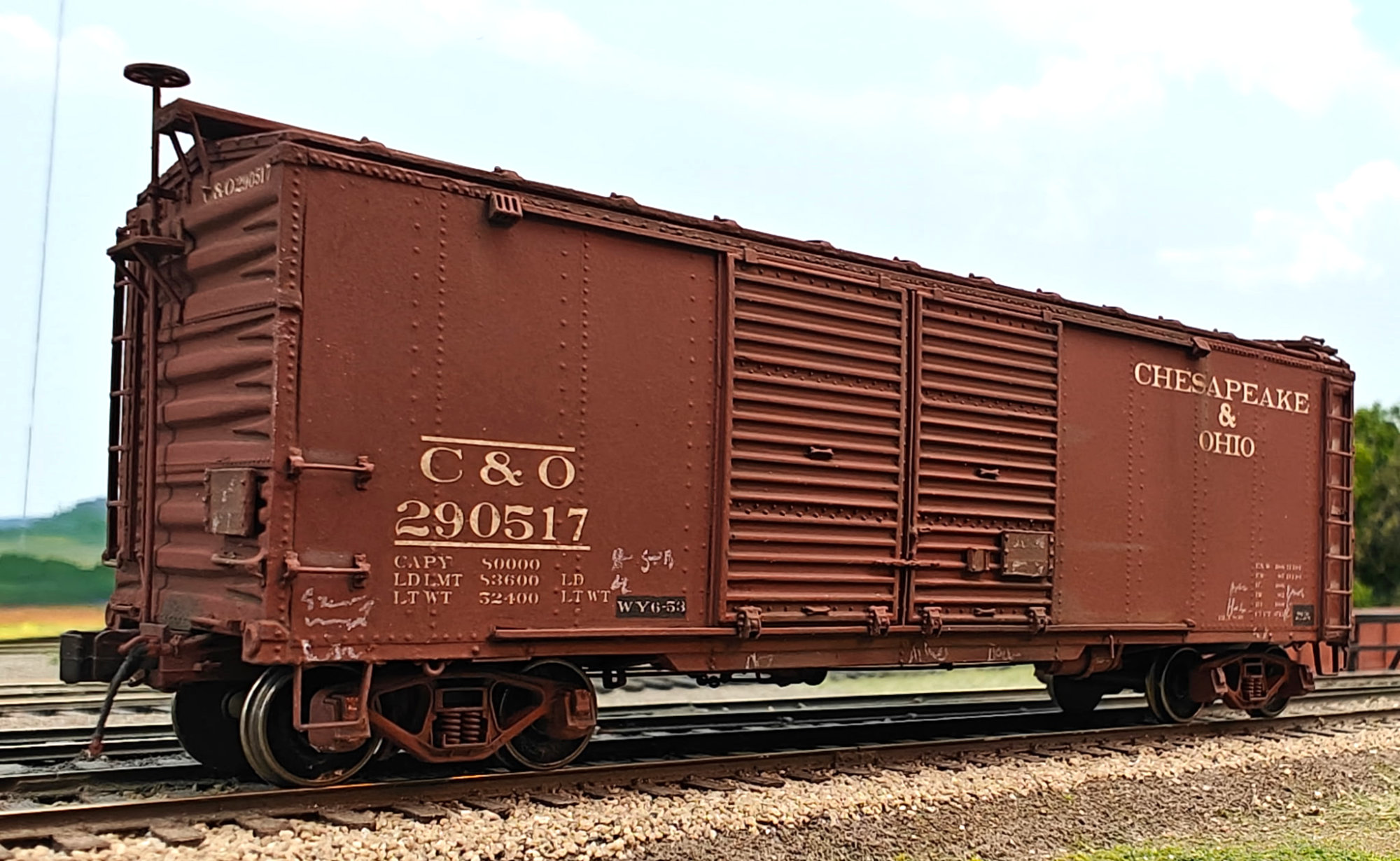
Photo and model by Ed Rethwisch
The cars underwent a series of renumberings over their lives. Most notably, the C&O acquired PM in 1947 and cars were converted over time to the C&O livery. This conversion process was not hurried, as some PM cars were still in their original PM lettering into the 1960s.
Usually, the cars were renumbered by simply adding a “2” in front of the old PM number. Thus, PM 91299 became C&O 291299. However, both railroads tended to renumber cars when they were assigned to a new service. As an example, 60 cars that were given Evans auto parts loading racks in 1948, were reclassed XAP, and were renumbered to C&O 257000-257059. Also, 100 cars were “leased” by the C&O from the PM in May of 1935 and renumbered to C&O 6600-6699. These cars were never returned and kept these numbers throughout their service lives.
Resin Car Works would like to thank the following rail historians and modelers for their high quality work. Without their efforts, these kits would not have been produced.
Tom Madden - casting work
Ted Culotta - decal artwork
Jerry Hamsmith – kit instruction coordination
Frank Hodina - masters, kit instructions and model photos
These extra files are intended to help you build our models.
Kit 19.02 instructions (3.5 MB PDF file)
Car diagram - This diagram for PM 90350-92349 includes information for both the Pullman built and Pressed Steel built cars. Pertinent information for the kit cars includes the notations for a Hutchins Dry Lading roof, Youngstown doors, Dreadnaught ends, and ARA cast steel trucks. The sheet has been updated through February 7, 1945. Jerry Hamsmith collection.
|

